What Should You Do After a Storm Damages a Tree in Gonzales, TX?
What should homeowners do if a tree is damaged during a storm?
After a storm in Gonzales, the first step is to stay clear of the damaged tree and surrounding area. Broken limbs, split trunks, and leaning trees can shift or fall unexpectedly. It’s especially common to see storm damage in neighborhoods with mature trees near Independence Square, Kerr Street, and homes around Independence Park.
A professional tree service can inspect the damage and safely remove hazardous branches or entire trees if necessary.
How can you tell if a storm-damaged tree is dangerous?
A tree may be unsafe if it is leaning suddenly, has large cracks in the trunk, or has major limbs hanging over structures. Trees resting on roofs, vehicles, or power lines require immediate professional attention.
Can storm-damaged trees sometimes be saved?
Yes. In some cases, strategic trimming or pruning can remove damaged branches and restore the tree’s health. However, if the trunk or root system is severely compromised, full removal is usually the safest option.
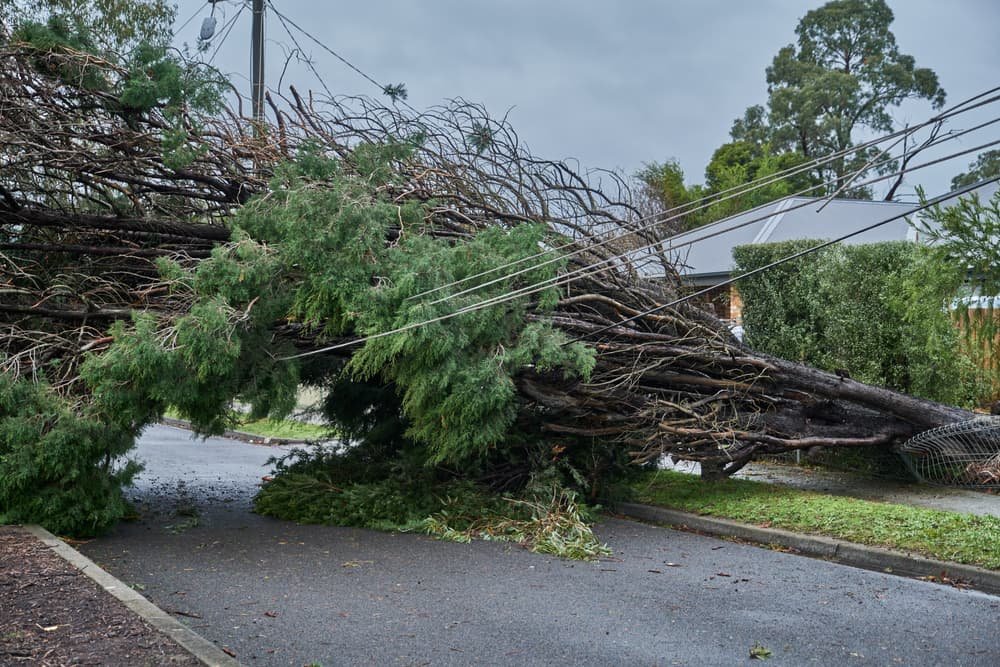
Why Storm Damage Is Common for Trees in Gonzales
Gonzales is known for its beautiful mature trees, especially oak and pecan trees that line many residential streets. While these trees provide shade and character, they can become vulnerable during severe weather.
Areas around St. Joseph Street, College Street, and neighborhoods near Gonzales High School often feature older trees that may experience limb failure during strong winds or heavy rainfall.
Weather Conditions That Can Damage Trees
Several local weather patterns can affect trees in Gonzales:
Strong Windstorms
Sudden gusts can snap heavy limbs or push weakened trees toward homes or fences.
Saturated Soil After Heavy Rain
When the ground becomes saturated, roots may lose stability, causing trees to lean or fall.
Lightning Strikes
Lightning can split trunks or weaken trees internally, creating long-term safety hazards.
Signs Your Tree May Fall After a Storm
Even if a tree doesn’t fall immediately during a storm, hidden damage can still create a serious risk.
Visible Trunk Cracks
Large vertical cracks often indicate structural failure within the tree.
Leaning Toward Structures
A sudden lean toward your house, garage, or fence may mean the roots have shifted.
Hanging or Broken Limbs
Branches hanging over driveways or roofs can fall without warning.
Uprooted Root Systems
If soil around the base of the tree appears lifted or cracked, the tree may be unstable.
How Professional Storm Damage Tree Removal Works
Removing storm-damaged trees requires careful planning and specialized equipment. Professional crews use safe techniques to protect surrounding structures and landscapes.
Step 1: Property and Tree Assessment
Technicians evaluate the tree’s condition, nearby structures, and potential hazards such as power lines.
Step 2: Controlled Tree Removal
Depending on the situation, professionals may use:
- Precision climbing techniques
- Rigging systems to lower large branches safely
- Crane-assisted removal for large or dangerous trees
Step 3: Debris Removal and Cleanup
After removal, the crew clears branches, logs, and debris so your property is safe and accessible again.
Step 4: Additional Tree Care Services
If needed, stump grinding or trimming of nearby trees may be recommended to prevent future hazards.
Why Gonzales Residents Choose Tree Solutions After Storms
When severe weather strikes, homeowners want a team that understands the local environment and has the equipment to respond quickly.
Experience With Large Texas Trees
Gonzales neighborhoods often feature large live oak and pecan trees that require careful removal techniques. Tree Solutions has experience working with these species throughout the area.
Crane Services for Large or Hazardous Trees
For trees located near homes or tight residential spaces, crane-assisted removal allows technicians to safely remove heavy sections without damaging surrounding structures.
Trusted by Local Homeowners
Many residents throughout Gonzales rely on Tree Solutions for dependable service after storms.
What locals say:
- “After a storm knocked a large limb onto our driveway near College Street, their crew handled everything safely.” – Emily
- “We had a huge oak leaning toward our house near Independence Park and they removed it carefully.” – Chris
How Preventive Tree Care Can Reduce Storm Damage
Routine tree maintenance can help reduce the likelihood of major storm damage.
Regular trimming can:
- Remove weak or dead branches
- Reduce excess canopy weight
- Improve airflow through the tree
- Strengthen the tree’s overall structure
Many homeowners in Gonzales schedule routine tree trimming to keep their trees healthier and safer during storm season.
Areas Tree Solutions Serves Around Gonzales
Tree Solutions proudly provides storm damage tree removal throughout Gonzales and surrounding areas, including:
- Downtown Gonzales
- Neighborhoods near Independence Square
- Homes around Gonzales High School
- Residential areas near St. Joseph Street and College Street
- Properties close to Independence Park
- Rural homes across Gonzales County
Get Fast Help When Storm-Damaged Trees Threaten Your Property
Storm damage can happen suddenly, and damaged trees should be handled quickly to prevent further problems.
If a storm has damaged a tree on your property, the experienced team at Tree Solutions is ready to help.
Call Tree Solutions at 830-857-4188 for professional storm damage tree removal in Gonzales, TX.

Frequently Asked Questions About Storm Damage Tree Removal in Gonzales, TX
What types of trees are most likely to suffer storm damage in Gonzales?
Large shade trees such as live oaks and pecans are common in Gonzales and can sometimes lose heavy limbs during storms. Trees with dense canopies or older branches may be more vulnerable when strong winds or heavy rainfall occur.
Can a leaning tree still be safe after a storm?
A leaning tree should always be evaluated by a professional. Sometimes the lean is temporary, but if the roots have shifted or the trunk is cracked, the tree could fall without warning.
Should I remove broken branches myself?
It’s best to avoid removing large branches yourself. Storm-damaged limbs may be under tension or partially attached, which can make them dangerous to cut without proper equipment and experience.
How soon should storm-damaged trees be inspected?
Trees should be inspected as soon as possible after a storm. Even if damage isn’t immediately visible, hidden structural issues could develop and pose risks to nearby structures or people.
Why do some Gonzales neighborhoods experience more tree damage during storms?
Older neighborhoods often have mature trees that have grown for decades. While these trees provide shade and beauty, their size and age can make them more vulnerable to limb breakage during strong winds.